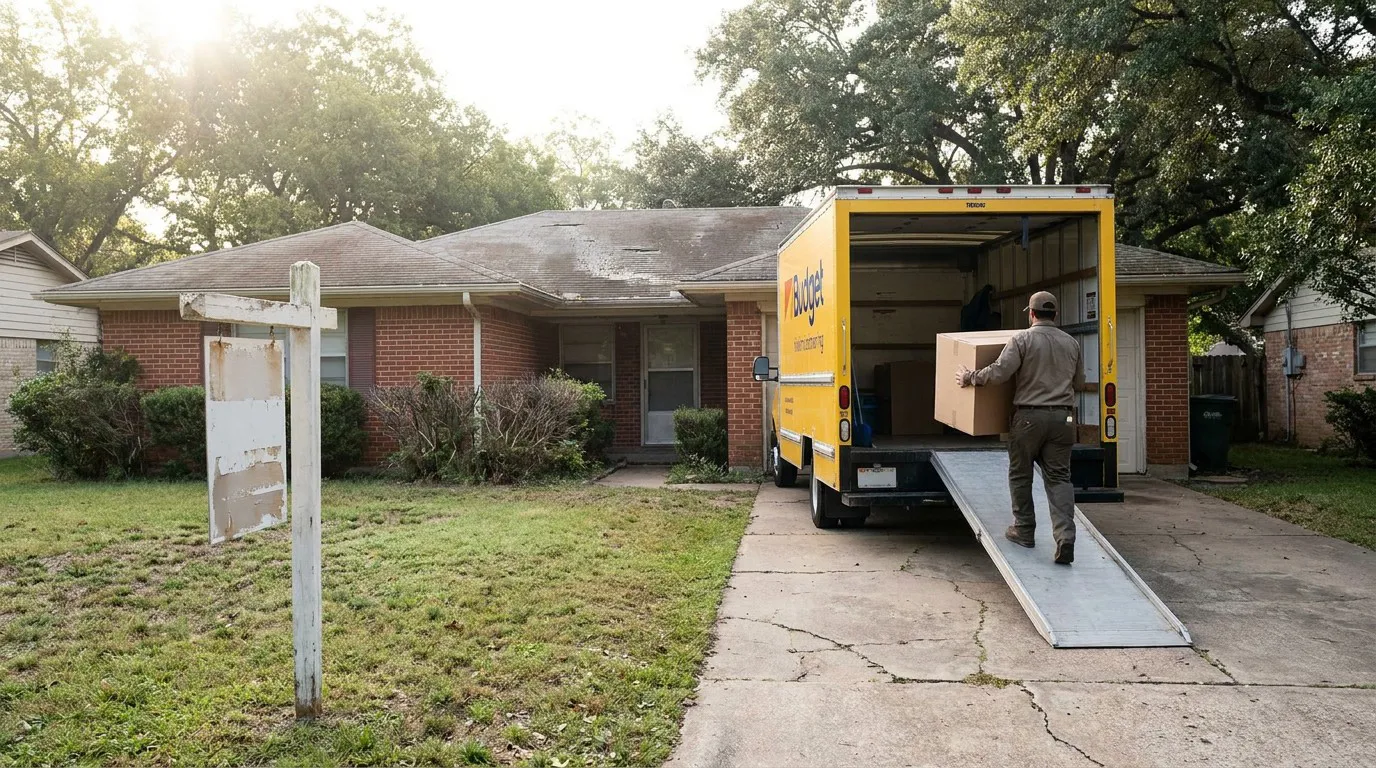
Your Money Built That House. Can You Get It Back?
Key Takeaways: Possibly. In Texas, community funds spent on a spouse’s separate property home can often be recovered through a reimbursement claim under Texas Family Code § 3.402, but you generally don’t become a co-owner of the house. To succeed, you generally must plead the claim and prove that community property benefited the separate estate, how much that benefit was worth, and that the separate estate would be unjustly enriched without repayment. Mortgage payments are generally measured by the amount paid, while improvements are measured by how much they raised the home’s value, not by what they cost. Your spouse may raise offsets, such as tax savings, but the statute bars the separate estate from claiming an offset for use and enjoyment of a primary or secondary residence, and the spouse seeking an offset must prove it. Because the judge has broad discretion, strong records, tracing, and appraisal evidence are key. The court may also impose an equitable lien under § 3.406 to secure payment.
Texas law generally lets the community estate recover community funds spent on a spouse’s separate property home, but the money doesn’t come back on its own. Texas recognizes reimbursement claims in divorce when one marital estate benefits another, such as when marital income pays down the mortgage on a house your spouse owned before the wedding. You generally have to plead the claim, prove it with records, and convince the court that fairness requires repayment. Your spouse may argue the contributions were small, already offset, or not owed at all.
If years of paychecks went into a home that your spouse now calls "theirs," you need a clear plan. Our team at Kuehm Family Law builds reimbursement cases with tracing, records, and trial preparation from the start. Call (713) 714-8880 or schedule a consultation with our team to discuss your situation.
How Texas Separates Community and Separate Property
Every reimbursement claim starts with characterization, which means deciding whether property is community or separate. Under Texas Family Code § 3.002, community property is property, other than separate property, that either spouse acquires during marriage. Texas Family Code § 3.003 presumes that property either spouse has during or when the marriage ends is community property. A spouse who claims otherwise must prove separate character by clear and convincing evidence.
A home owned before marriage generally stays separate property, even when community money pays for it. Under Texas’s inception-of-title rule, the house’s character is fixed when it was acquired. Texas won’t convert it to community property just because marital funds paid the mortgage. The remedy is generally reimbursement to the community estate, not partial ownership of the house.
Tracing also matters when separate and community funds were mixed in one account. Our article on the community-out-first rule explains one method courts may use to sort mixed funds.
The Legal Basis for Reimbursement Claims in Texas Divorce
The statute is Texas Family Code § 3.402. Section 3.402(a) sets out the general rule that a claim for reimbursement exists when one marital estate confers a benefit on another marital estate that, if not repaid, would unjustly enrich the benefited estate. Section 3.402(c) describes how that benefit can arise, including paying a debt, liability, or expense secured by a lien on property owned by another estate, making capital improvements that enhance the value of real property, and providing uncompensated time, toil, talent, or effort. You can read the full text in Chapter 3 of the Texas Family Code. Check the current version before relying on it, because the Legislature has amended this subchapter over time.
What You Must Prove
Under § 3.402 and Texas case law, the spouse seeking reimbursement generally must prove:
- Property of one marital estate was used to benefit property of another estate
- The value of that benefit
- The benefited estate will be unjustly enriched unless it repays the estate that paid
Each element needs evidence, not just testimony. Bank statements, loan amortization schedules, closing documents, and contractor invoices usually carry far more weight than memories.
Types of Benefit Relevant to a Home
Texas Family Code § 3.402(c) recognizes several types of benefit. The first is paying a debt, liability, or expense secured by a lien on a separate property home, such as a mortgage that existed when the marriage began. The second is making capital improvements that enhance the value of real property. The third, under § 3.402(c)(3), is uncompensated time, toil, talent, or effort used to enhance a spouse’s separate estate, which can extend beyond a business a spouse controls. Section 3.409 bars reimbursement for certain items, including living expenses of a spouse or child and contributions or debts of only nominal value.
How Courts Value Mortgage Payments Versus Improvements
What you recover depends on what the money paid for. Under Texas Family Code § 3.402, reimbursement for improvements is measured by the increase in value to the benefited estate. Debt payments are generally measured by the amount of principal paid.
| Type of Contribution | How the Benefit Is Measured |
|---|---|
| Mortgage principal reduction | Generally the amount of debt the paying estate paid |
| Improvements to real property | The increase in value the improvements caused, not the amount spent |
| Uncompensated time, toil, talent, or effort | Generally the value of unpaid work for a business the spouse controls, subject to proof |
A principal reduction claim is often easier to prove. If marital funds reduced the mortgage principal by a documented amount, that amount generally defines the benefit. Interest payments, by contrast, are generally not reimbursable under § 3.402.
Improvement claims usually require appraisal evidence. A $150,000 kitchen remodel could add far less than $150,000 to market value, and the community generally recovers only the increase. Legal commentary, including an SMU Law Review analysis of reimbursement valuation, notes that Texas reimbursement is generally not a dollar-for-dollar refund.
💡 Pro Tip: Ask for a qualified retrospective appraisal early. Proving value "before" and "after" improvements made years ago takes time and solid comparable sales.
Offsets: What Your Spouse May Argue and Where the Law Limits Them
Your spouse may try to reduce the claim with offsets. Under Texas Family Code § 3.402, benefits from the use and enjoyment of property may be offset against a reimbursement claim. Texas courts have also considered related benefits, such as income from the property and income tax savings from deductions like mortgage interest and property taxes.
The Residence Exception Helps You
For a primary or secondary residence owned wholly or partly by a separate estate, Texas Family Code § 3.402 bars the separate estate from claiming an offset for use and enjoyment against community contributions. In plain terms, your spouse can’t argue, "You lived there rent-free, so we’re even." Other offsets, such as tax savings, may still be raised.
The spouse asking for an offset must prove it. If your spouse claims the community enjoyed tax savings, they generally need to produce the returns and math to support it.
The Court’s Discretion and Collecting What You Are Owed
Reimbursement claims are based on fairness, which gives the trial judge real discretion. The court resolves reimbursement claims using equitable principles, including offsetting claims against each other when appropriate. Appeals courts generally review those decisions only for abuse of discretion, so how well you present the evidence can greatly affect the result.
Texas law also offers a way to secure payment. Under Texas Family Code § 3.406(a), the court may impose an equitable lien on the benefited estate’s property, such as the separate property home, to secure the reimbursement claim. A lien may make it harder for your spouse to sell or refinance the house without paying what the court awarded.
Reimbursement also ties into the broader division. Under Texas Family Code § 7.001, courts divide the community estate in a manner that is just and right. Section 7.007 requires the court to decide reimbursement claims under equitable principles and, if appropriate, divide them as part of that division.
Gathering Evidence Before Your Spouse Shapes the Story
Strong reimbursement cases depend on careful discovery. Your spouse may understate payments or claim separate funds paid the mortgage. Focus on gathering:
- Mortgage statements and amortization schedules from the date of marriage forward
- Bank and payroll records showing the source of each payment
- Permits, invoices, and contracts for improvements
Look closely at hidden funding sources. If your spouse claims payments came from separate investment or digital asset accounts, test those claims. Rob Kuehm brings 19+ years of family law experience and direct case experience tracing cryptocurrency and digital assets in divorce.
💡 Pro Tip: Plead reimbursement specifically in your petition or counterpetition. Raising the claim late may limit how you can present it at trial.
Frequently Asked Questions
-
Does paying my spouse’s mortgage with marital funds make me a co-owner of the house?
Generally, no. The home stays separate property, and the community’s remedy is generally a reimbursement claim under Texas Family Code § 3.402 rather than an ownership interest.
-
Can I recover the interest portion of mortgage payments?
Generally, no. Texas Family Code § 3.402(c) recognizes claims for the reduction of the principal amount of a debt secured by property owned before marriage, to the extent the debt existed at the time of marriage, but interest payments are generally not reimbursable.
-
Will the court give me back every dollar spent on renovations?
Not necessarily. Reimbursement for improvements is measured by the increase in value they caused, not the cost.
-
Can my spouse argue I owe rent for living in the home?
For a primary or secondary residence, Texas Family Code § 3.402 bars the separate estate from offsetting use and enjoyment against community contributions.
-
How does the court make sure the claim actually gets paid?
Texas Family Code § 3.406(a) allows the court to impose an equitable lien on the benefited property to secure the award.
Protecting the Community’s Investment
Community funds spent on a spouse’s separate property home can often be recovered, but only with careful proof. Texas Family Code § 3.402 defines the claim, how improvements are valued, and where use-and-enjoyment offsets stop. Texas Family Code § 3.406 gives the court a way to secure payment. Talk with an attorney about your situation.
Kuehm Family Law handles contested, high-asset Houston divorces with a trial lawyer’s preparation. Learn how our Texas property division lawyer team handles these disputes. Visit Kuehm Family Law, call (713) 714-8880, or contact our office to reach our Houston family law attorneys.
Disclaimer: This content is for informational purposes only and is not legal advice. Every case is unique, and results may vary. Consult an attorney about your specific circumstances.